Publication records
Title, subtitle, edition, language, cover, and status in one organized record.
Publishing catalog
Organize books and journals with the data, files, and relationships needed to present and manage your collection.
Schedule a demo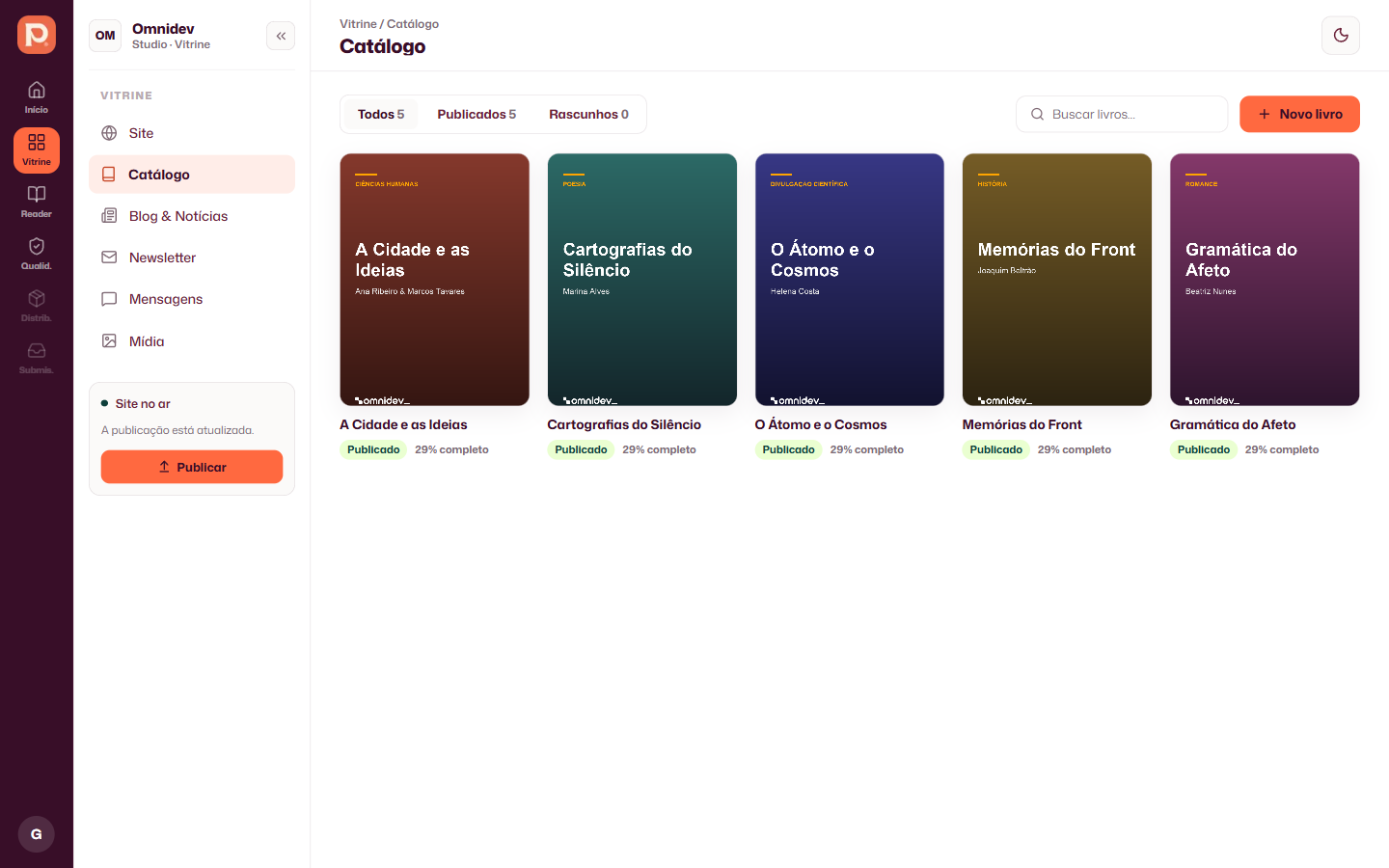
Title, subtitle, edition, language, cover, and status in one organized record.
Authors, editors, affiliations, and other contributions linked to the title.
ISBN, DOI, EPUB, PDF, licenses, and distribution links associated with the title.
Everything the team needs to register, find, and prepare the work for other channels — without a parallel inventory.
Dois tipos de publicação no mesmo acervo, com fichas adequadas a cada rotina editorial.
Campos usados pela equipe e pelos canais públicos, sem reescrever a ficha a cada lançamento.
Participações ligadas à obra com afiliação e papéis claros para crédito e catálogo público.
Capas, EPUB, PDF e demais materiais permanecem associados ao cadastro — não em pastas soltas.
Rascunho e publicado separados, com filtros para achar o título no acervo em segundos.
Imagens reutilizáveis com metadados de acessibilidade para site, blog e campanhas.
Before: spreadsheets, folders, and emails with versions of the same work.
With Papaya: one record feeds site, content, and reading.
Before: books and journals in different tools.
With Papaya: both types in the same collection, with clear status.
Before: ISBN, DOI, and files scattered around.
With Papaya: identifiers and formats stay on the work.
We compare with what publishers already use — without inventing a fake rival.
Handles inventory; does not serve the site or reader without re-entering data.
Publishes pages; rarely treats ISBN, DOI, contributors, and formats as the editorial core.
Stores the file; Papaya keeps the record ready to power channels.
The demo shows the catalog with status, search, and formats linked to the work — the same back-office structure.
Yes. Both publication types can be part of the publishing house’s catalog.
Yes. Status separates work still in preparation from content that has already been published.
Covers and digital formats remain associated with the publication record.
Team permissions define who can view, create, or edit publications.
The demo is tailored to your team’s real process.
Schedule a demo